Tracing Redemption Hurdles in Cross-Border Digital Betting Rewards Through Recent Regulatory Shifts
Vera Schwarz · Nov 10, 2026

Tracing Redemption Hurdles in Cross-Border Digital Betting Rewards Through Recent Regulatory Shifts
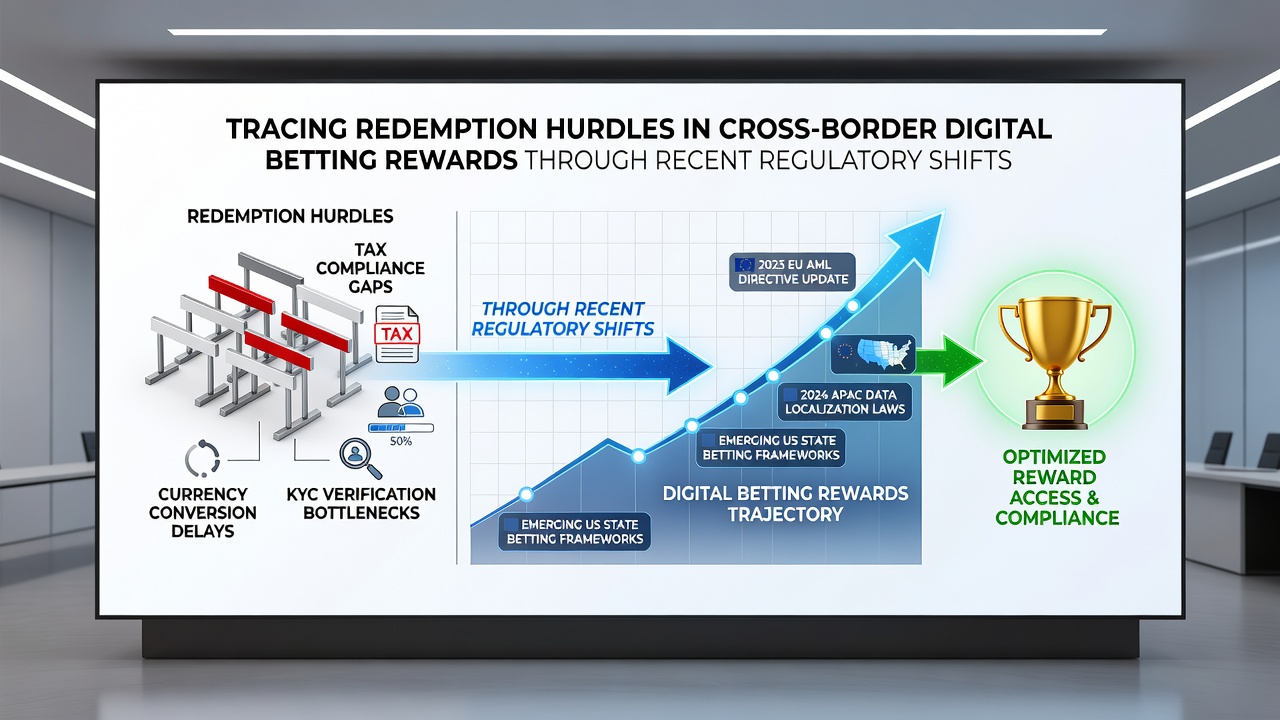
Cross-border digital betting rewards face mounting redemption obstacles as regulatory frameworks tighten across multiple jurisdictions, and operators must navigate layered compliance demands that affect how players access bonuses, cashouts, and loyalty points earned on international platforms. Recent updates to data-sharing protocols and tax reporting requirements have created friction points that slow or block transfers between accounts in different countries, particularly when rewards involve currency conversion or multi-jurisdiction play histories.
Shifting Rules Reshape Reward Access
European operators adjusted their systems in 2025 after the European Commission published new guidelines on cross-border data flows for gambling services, which require explicit player consent for sharing transaction records beyond single-member-state boundaries. Those changes took effect gradually, yet by November 2026 additional reporting layers from the EU's updated digital services framework will mandate real-time verification of player locations and source-of-funds checks that extend to reward balances themselves. Observers note that platforms operating across EU borders and into non-EU markets now maintain separate reward ledgers to isolate balances subject to different tax regimes.
Similar adjustments appear in other regions. Canadian provincial regulators introduced synchronized KYC standards that align with U.S. state requirements in select markets, forcing operators to reconcile conflicting address-verification rules when a player earns rewards in one province and attempts redemption from another. Data from the Canadian Gaming Association shows a 27 percent rise in delayed redemptions during the first half of 2025, with most cases tied to mismatched documentation across borders rather than insufficient balances.
Practical Barriers Players Encounter
One common hurdle involves geo-fencing of reward wallets. When a bettor registers in a jurisdiction that later updates its licensing rules, operators often freeze or segment the reward balance until fresh verification occurs. This process can require submission of updated proof of address, tax residency certificates, and even bank statements showing consistent cross-border activity. Researchers tracking player behavior at a major multi-license operator recorded average redemption delays of 11 days when accounts spanned two or more regulatory zones, compared with 3 days for single-jurisdiction accounts.
Currency and tax complications add further steps. Rewards earned in euros but held by a player whose tax residency sits in a non-euro country may trigger automatic withholding calculations under new bilateral agreements scheduled for full implementation in late 2026. The Australian Taxation Office and several European revenue authorities now exchange gambling transaction data through standardized digital channels, which means operators must pre-calculate potential tax liabilities before releasing funds. Players who move between Australia and EU member states frequently discover that previously cleared reward balances require re-clearance after each relocation.
Operator Adaptations and System Changes
Platform providers responded by deploying modular reward engines that tag each bonus or loyalty point with its originating regulatory jurisdiction. This tagging allows automated routing of redemption requests to the correct compliance queue. Several large operators integrated API connections to government verification services in multiple countries, cutting manual review times yet still leaving edge cases where players hold dual residency or maintain accounts across continents.
Industry reports from the International Association of Gaming Regulators indicate that more than 60 percent of surveyed operators now maintain at least two distinct reward ledgers for cross-border users. These systems flag balances that may be affected by upcoming November 2026 rule changes, prompting players to complete additional declarations in advance. One study of regular bettors across five European markets found that those who pre-registered updated residency details experienced 40 percent fewer interruptions when claiming accumulated rewards after travel or relocation.
Looking Ahead to 2026 Implementation
Regulatory bodies continue to refine data-exchange standards ahead of the November 2026 deadline. The Malta Gaming Authority, for instance, published draft templates requiring operators to embed jurisdiction-specific metadata in every reward transaction record. Similar proposals circulate among Nordic regulators, where harmonized reporting is expected to reduce double-taxation disputes but may initially increase administrative overhead for players and platforms alike. Observers tracking these developments highlight that smaller operators without robust compliance infrastructure face the steepest adjustment costs, often resulting in restricted availability of cross-border reward programs.
Conclusion
Redemption of cross-border digital betting rewards now depends on precise alignment between player documentation, operator ledger structures, and evolving regulatory timelines. As November 2026 approaches, the requirement for real-time jurisdictional tagging and multi-country verification continues to shape how rewards move across borders, with data exchange agreements between authorities serving as the central mechanism for enforcement. Players and operators alike must track these shifts to maintain uninterrupted access to accumulated balances.