Inside the Mechanics of Tiered Reward Systems at Virtual Casinos
Petra Schmitz · Oct 13, 2026
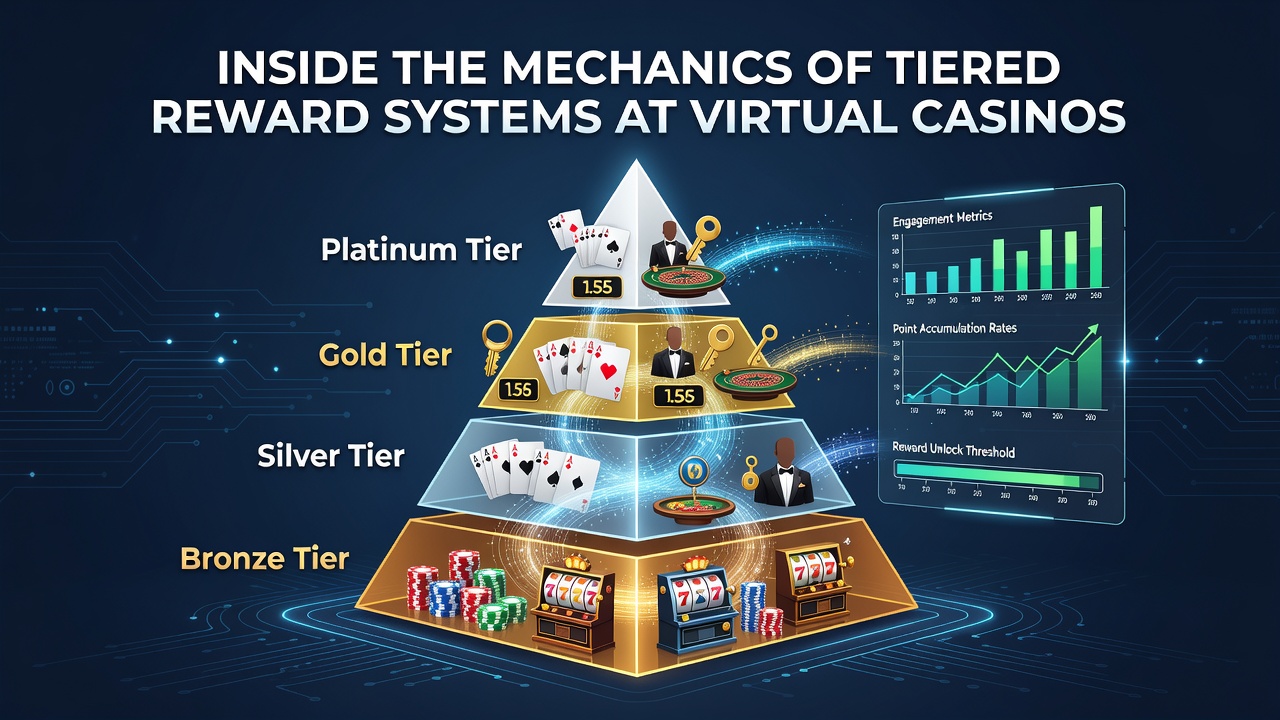
Tiered reward systems in virtual casinos operate through structured loyalty frameworks that assign players to levels based on cumulative activity metrics. These programs typically begin with an entry tier and advance through intermediate and premium categories as players meet defined thresholds for wagers or deposits. Operators track participation via integrated software platforms that log every bet in real time and convert activity into loyalty points according to preset formulas. Points accumulation follows formulas where each dollar wagered generates a fixed number of credits, often ranging from one point per dollar on slots to fractions of a point on table games. Thresholds for tier advancement differ across platforms yet commonly require 1,000 points for the first upgrade, 5,000 for the second, and 20,000 or more for elite status. Once achieved, tier status remains active for a rolling twelve-month window that resets according to the operator's calendar cycle. Benefits scale with each level and include cashback percentages that rise from 5 percent at entry level to 15 percent or higher at top tiers, alongside exclusive event access adn personalized account managers. Data from industry reports shows that players in higher tiers generate disproportionate revenue shares, with top-tier members accounting for up to 60 percent of total handle despite representing less than 10 percent of the player base.Point Calculation and Advancement Rules
Calculation engines apply multipliers during promotional windows, allowing accelerated progress when operators run double-point events or seasonal campaigns. Advancement rules also incorporate minimum activity requirements, such as at least one wager every thirty days, to prevent inactive accounts from retaining status. In October 2026 regulatory filings from iGaming Ontario indicated that tier reset policies must be disclosed clearly in terms of service documents to maintain compliance with provincial standards.
Players receive notifications via email and in-app messages when they approach the next threshold, and automated systems adjust benefit packages within twenty-four hours of qualification. Some platforms publish transparent tier charts on their sites while others embed the details within account dashboards accessible only after login.
Player Segmentation and Engagement Metrics
Segmentation algorithms group users according to predicted lifetime value derived from historical play patterns, deposit frequency, and game preferences. These groupings influence which tier offers appear during login sequences and how frequently operators send targeted communications. Research published by the University of Nevada's International Gaming Institute found that tiered programs increase average session length by 18 percent among participants who reach at least the second level compared with non-tiered players.
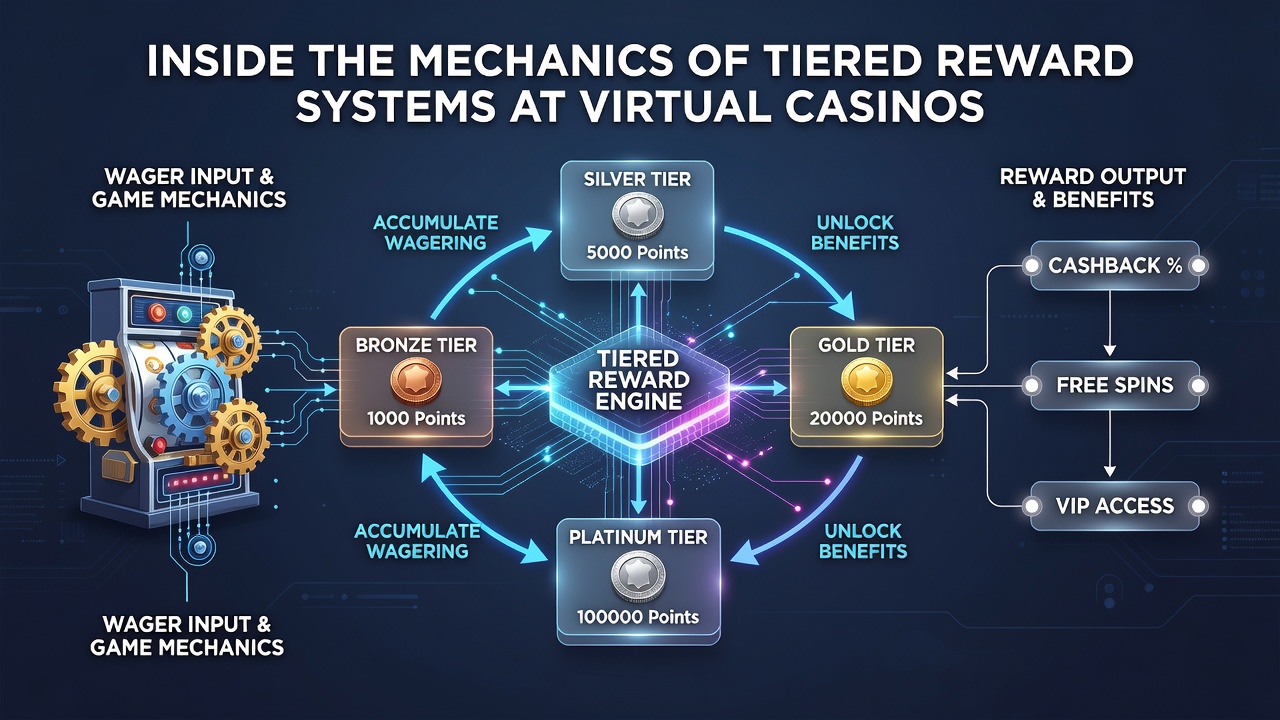
Engagement metrics tracked by operators include time between tier upgrades, redemption rates for tier-specific rewards, and churn percentages after status loss. Figures from the European Gaming and Betting Association reveal that retention among players who maintain premium tier status exceeds 75 percent annually while entry-level retention hovers near 35 percent.
Technical Infrastructure Supporting Tiers
Backend systems rely on customer relationship management databases that synchronize with game servers every few seconds to update point balances. Fraud detection modules flag unusual patterns such as rapid point accumulation across multiple accounts and trigger manual reviews before tier benefits activate. Integration with payment processors allows automatic crediting of cashback amounts to player wallets on a weekly or monthly schedule depending on tier level.
Third-party providers supply white-label loyalty modules that smaller operators license rather than develop internally, standardizing many mechanics across different brands while permitting customization of point values and reward catalogs. These modules also generate compliance reports required by licensing authorities in jurisdictions such as Malta and Gibraltar.
Conclusion
Tiered reward systems function through interconnected rules for point accrual, tier thresholds, benefit scaling, and automated compliance checks. Operators refine these components continuously based on aggregated player data, regulatory updates, and competitive pressures within the virtual casino sector. The resulting frameworks deliver differentiated experiences calibrated to individual activity levels while maintaining operational transparency required by oversight bodies.